
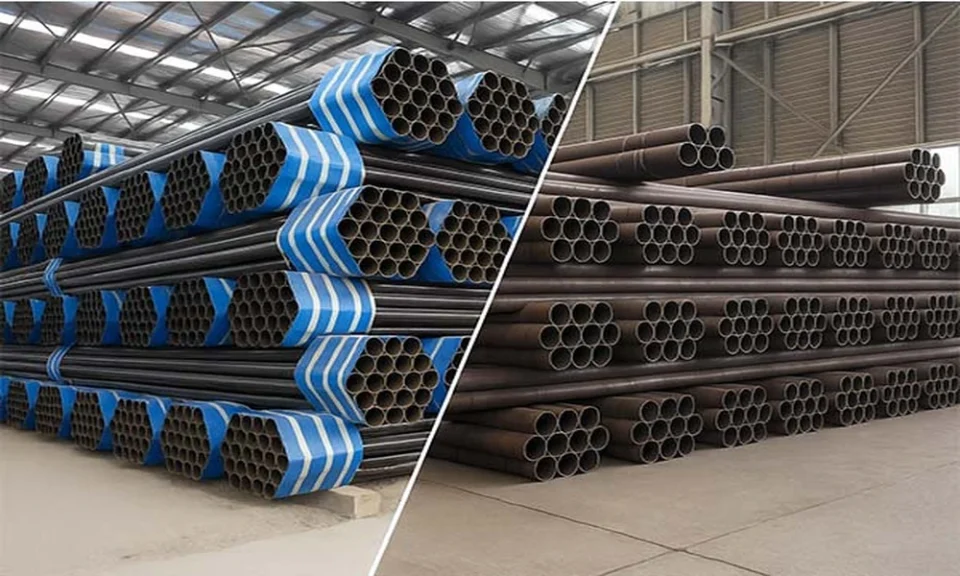
Seamless pipes often carry an aura of superiority, with many fabricators convinced that they are the gold standard for any application. The reality is far more nuanced. In the world of steel pipe, assumptions about performance, reliability, and value can lead to costly mistakes. Let’s break down the most pervasive myths and reveal the real story behind seamless and welded steel pipes in fabrication.
Debunking the Myth: Seamless Pipes Are Always Superior to Welded Pipes
At first glance, seamless pipes might seem like the obvious choice for critical projects. Their method of manufacturing, extruding a solid billet into a hollow tube, results in a pipe with no weld seam, which is often interpreted as a guarantee of strength and uniformity. This feature makes seamless pipes especially attractive for applications where internal pressure is high or fluctuating, such as hydraulic systems and certain chemical processing lines.
Yet, the story does not end there. While seamless pipes do excel in high-pressure and high-purity situations, the absence of a weld does not always translate into a clear performance advantage for every application. Modern welded pipes, particularly those made using Electric Resistance Welding (ERW), are manufactured with precision and strict quality control. The resulting seam is so refined that, for many fabrication tasks, it poses no drawback at all.
When Welded Pipes Outperform Seamless Alternatives
Welded pipes have advanced considerably. Improvements in ERW and other welding technologies have addressed historical concerns about weak seams. Today, welded pipes often boast tighter dimensional tolerances than seamless equivalents, making them a preferred choice for large structural projects, piling, and foundation work in Montreal’s demanding construction climate.
A simple comparison demonstrates the two pipe types’ strengths:
| Feature | Seamless Pipe | Welded Pipe |
|——————————|———————-|———————–|
| Manufacturing process | Extruded from billet | Rolled & welded strip |
| Pressure tolerance | High | High (with strict QC) |
| Dimensional accuracy | Moderate | Superior |
| Max diameter (typical) | Up to 24″ | Up to 100″+ |
| Cost (per unit length) | Generally higher | Lower (esp. surplus) |
Myth: Welded Pipes Are Less Reliable for High-Pressure Applications
The assumption that welded pipes are inherently less reliable under pressure is outdated. Advances in ERW technology now create weld seams that are as strong as the base metal, passing rigorous hydrostatic and non-destructive tests before leaving the yard. Welded pipes routinely serve in mechanical and pressure systems, from industrial boilers to municipal water mains.
Industry standards such as ASTM and CSA outline strict requirements for both seamless and welded pipes, ensuring that when sourced from reputable suppliers, both types deliver reliable performance. The deciding factor is not the presence of a weld, but the quality of the pipe and the standards adhered to during its production.
Misconception: Seamless Pipes Are Always More Expensive and Less Cost-Effective
While seamless pipes generally command a higher price due to the complexity of their manufacturing process, this is not a universal truth. The market for surplus and used welded pipe, especially in Montreal, often allows fabricators to achieve substantial savings without sacrificing quality. Local suppliers like Stealth Pipe and Steel sale offer an extensive selection of both new and surplus pipes, enabling builders to meet project specs while optimizing cost.
Sometimes, the initial savings of welded pipe are amplified by lower transportation costs and easier local availability. The true measure of cost-effectiveness should weigh material price, fabrication costs, and the pipe’s service life in the intended application.
Myth: Welded Pipes Are Unsuitable for Structural and Heavy Load Applications
Structural engineers once hesitated to use welded pipes for heavily loaded applications, such as foundation piling or major support columns. Today, welded pipes dominate these sectors. Through careful selection of wall thickness, diameter, and steel grade, welded pipes provide the load-bearing integrity required for demanding construction. Montreal’s deep foundations and urban infrastructure projects are packed with examples where welded pipe outperforms due to custom fabrication and flexibility in supply.
Myth: Seamless Pipes Are the Only Choice for Corrosion Resistance
Resistance to corrosion is less about pipe type and more about material grade, coatings, and the operating environment. Welded pipes are available in the same corrosion-resistant alloys as seamless ones and can be finished with specialized coatings or galvanization. For many underground or submerged applications, what matters most is matching the pipe’s properties to the actual exposure conditions, and maintaining that protection over time.
Misunderstanding: Fabrication and Installation Ease Between Seamless and Welded Pipes
Both pipe types can be cut, beveled, threaded, or welded on-site, especially when ordered through a supplier equipped for precision fabrication. Services like custom cutting or splicing at the supplier’s yard can significantly reduce labor time and costs once materials reach the site. The key is leveraging a local inventory that aligns with project specs and timelines, minimizing delays and rework.
Debunking the “One-Size-Fits-All” Pipe Selection Approach
Choosing the right steel pipe is never about picking the most expensive or the most hyped product. It requires matching the pipe’s diameter, wall thickness, grade, and fabrication to the job’s unique demands. Local expertise and inventory make a critical difference, helping builders quickly source the exact material needed for the best value.
Ultimately, seamless and welded pipes each have their place. Understanding their real-world strengths shifts the decision from myth to strategy, and empowers fabricators, engineers, and builders to get the job done right.
