
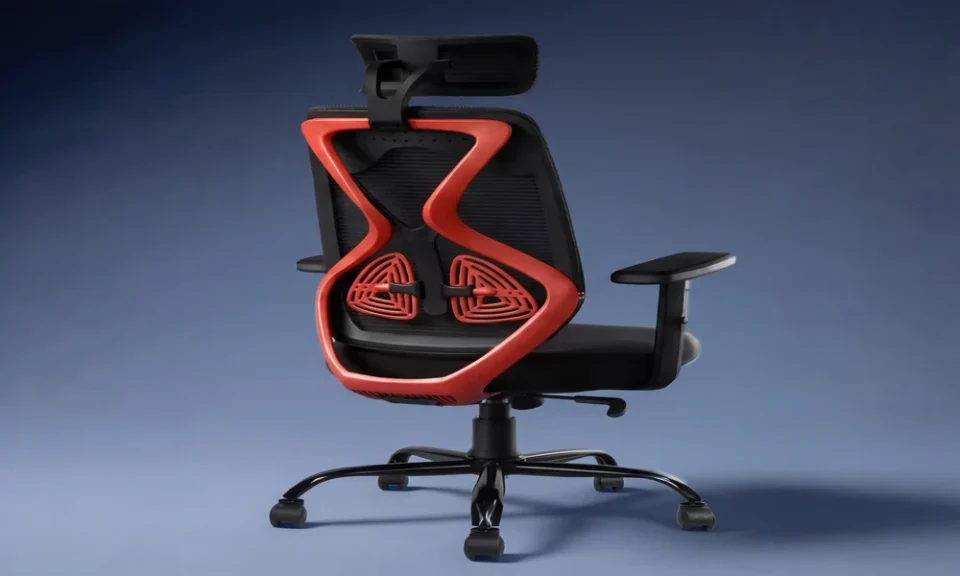
Most Singapore office workers will sit in their chair for close to two thousand hours this year. That figure rarely registers as significant until something goes wrong, the lower back that starts complaining around 3pm, the shoulder stiffness that has been building for months, the hip tightness that has become a constant companion on the commute home. An office desk chair that is correctly specified and properly adjusted for its user addresses these problems before they develop rather than after they have become ingrained physical complaints.
Workplace ergonomics is not a fringe consideration in Singapore’s professional environment. The Ministry of Manpower’s workplace health guidelines specifically address musculoskeletal health, and Singapore’s private sector increasingly recognizes that physically uncomfortable workers are less productive workers. An office desk chair that supports the body correctly is a direct investment in both the worker’s well being and the organization’s operational effectiveness.
The Anatomy of an Ergonomic Office Chair
Understanding what makes an office desk chair ergonomically appropriate requires knowing which adjustments matter and why. Seat height is adjusted so the feet rest flat on the floor with the thighs horizontal, which requires the height range to match the user’s floor-to-knee measurement. A standard range of forty-two to fifty-two centimeters covers the majority of adult Singaporeans.
Lumbar support is the feature with the greatest impact on lower back health. The natural inward curve of the lumbar spine flattens when a person sits without support, putting compressive load on the inter-vertebral discs. A lumbar support that maintains the natural curve during extended sitting significantly reduces this load. Adjustable lumbar support allows the height and depth of the support to be matched to the individual user’s anatomy.
Office desk chair options at LCF include fully adjustable task chairs with independent lumbar, armrest, and seat depth adjustment, as well as executive chairs and operator chairs suited to different workplace roles and usage patterns.
Armrest Adjustment
Poorly adjusted armrests are a common and underappreciated source of shoulder and neck discomfort. Armrests that sit too high encourage the user to raise their shoulders continuously to maintain contact, creating chronic trapezius tension. Armrests that are too low provide no support and often result in the user leaning to one side to reach a surface. Armrests at the correct height allow the shoulders to sit relaxed, the elbows to rest at approximately ninety degrees, and the forearms to support naturally while using the keyboard.
Adjustable armrests that can be set to the exact height that produces this position are therefore a practical ergonomic feature rather than a luxury. For workers who type extensively throughout the working day, correctly positioned armrests meaningfully reduce the cumulative strain on the shoulder and neck musculature over a working week.
Seat Pan Depth
Seat pan depth is an adjustment feature that is frequently overlooked but matters considerably for tall and shorter users. The seat depth is the front-to-back measurement of the seat. A seat that is too deep for the user’s thigh length creates pressure on the back of the knees, which restricts circulation and causes discomfort over time. A seat depth adjustment that allows the front edge of the seat to be moved to approximately five centimeters from the back of the user’s knees is the ergonomic target.
LCF’s ergonomic office chair range includes seats with adjustable depth or multiple size options to accommodate the range of body proportions across Singapore’s diverse workforce.
Selecting the Right Chair for the Role
Different workplace roles create different ergonomic demands. A data analyst who is primarily screen-focused for eight hours needs different support from a sales executive who is in and out of their chair frequently and uses the phone extensively. A creative director who works across multiple screens at different heights needs different armrest and height flexibility from an administrative officer with a fixed dual-screen setup.
Ergonomic workplace seating selection from LCF involves a discussion of the user’s role, their physical dimensions, and the workstation configuration before a specific chair model is recommended. This approach produces a better outcome than selecting a chair by appearance or price point alone.
Chair Adjustment as Part of the Investment
Purchasing the right office desk chair is only part of the ergonomic intervention. Correct adjustment of the purchased chair for the specific user is equally important. A chair with full adjustability that is never adjusted from its default settings provides no ergonomic benefit beyond a fixed chair.
LCF’s team can provide guidance on correct chair adjustment as part of the purchase process. For organisations purchasing chairs for multiple employees, a brief adjustment tutorial ensures that the ergonomic investment translates into actual physical benefit for the workforce.
For Singapore employers and home office workers who recognise that the office desk chair is the most-used and most physically consequential piece of furniture in the working day, LCF provides the product range, specification knowledge, and practical guidance needed to make the right choice.
