
The market for shipping containers in Singapore has expanded well beyond the port terminals of Tanjong Pagar and Pasir Panjang. Today, containers serve as pop-up retail spaces along Haji Lane, mobile offices on Jurong Island construction sites, cold-storage units for food distributors in Senoko, and secure document archives for law firms in the Central Business District. This buying guide explores the diverse uses of shipping containers across Singapore and offers step-by-step advice for making a sound purchase.
Common Uses for Shipping Containers in Singapore
Storage and Warehousing
Space is a premium commodity in Singapore. Shipping containers provide an immediate, relocatable storage solution without the lead time or cost of conventional construction. Businesses place them in industrial yards, carpark decks, and even rooftop areas to store inventory, tools, and seasonal equipment.
On-Site Offices and Workspaces
Modified containers fitted with air conditioning, insulation, lighting, and data cabling serve as fully functional site offices. Construction firms use them throughout the project lifecycle, then relocate them to the next job. The modular approach eliminates the expense of temporary building permits for traditional site cabins.
Retail and Hospitality Pop-Ups
Container-based retail has become a familiar sight at events such as Artbox Singapore and various weekend markets. The robust steel shell provides security, while creative cladding and fit-outs deliver visual appeal. Cafes, fashion boutiques, and art galleries have all operated successfully from converted cargo containers.
Cold Chain and Pharmaceutical Storage
Refrigerated containers – reefer units – maintain precise temperatures for perishable goods and pharmaceutical products. Singapore’s role as a regional pharmaceutical hub makes reefer availability a critical factor for many businesses.
“We lease three reefer containers at our Tuas facility to handle overflow during peak demand. They plug straight into our existing power grid and give us the buffer capacity we need without building a permanent cold room,” says Angela Lim, logistics director at a Singaporean pharmaceutical wholesaler.
A Step-by-Step Buying Guide
Step One: Define the Purpose
Clarity of purpose determines every subsequent decision. A freight container bound for international shipping must carry a valid CSC plate and meet ISO dimensional standards. A storage container for a Woodlands warehouse yard may not require the same certifications but must be watertight and structurally sound. An industrial container destined for conversion into a retail space needs a clean interior, sound flooring, and walls free of deep corrosion.
Step Two: Choose the Size
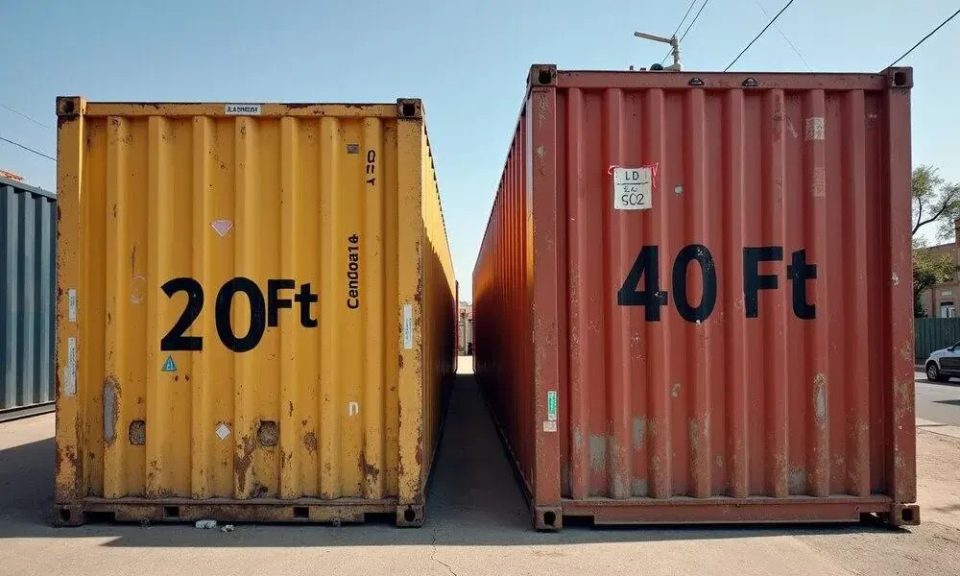
The two most common sizes are the twenty-foot unit, offering roughly thirty-three cubic metres of internal space, and the forty-foot unit, providing approximately sixty-seven cubic metres. High-cube variants add an extra foot of ceiling height – valuable for palletised goods or interior fit-outs. For sites with restricted access, ten-foot containers offer a compact alternative.
- Twenty-foot: ideal for small businesses and partial loads.
- Forty-foot: suited to bulk storage and full shipments.
- High-cube: extra headroom for stacking and conversions.
- Ten-foot: compact option for tight urban sites.
Step Three: Decide Between New and Used
New containers, often called one-trip units, arrive in near-pristine condition and carry the longest service life. Used containers are graded by condition – Grade A shows minimal wear, Grade B has moderate cosmetic marks, and Grade C may need repairs. For customer-facing applications, a new or Grade A unit makes the strongest impression. For a construction yard, a well-inspected Grade B unit offers excellent value.
Step Four: Select a Reputable Supplier
Look for a shipping container Singapore dealer with a physical yard, transparent pricing, and documented inspection records. Request references, compare at least three itemised quotes, and verify certifications. A supplier who encourages inspection of their stock before purchase signals confidence in their product quality.
Step Five: Arrange Delivery and Placement
Singapore’s dense urban landscape introduces specific delivery challenges. Narrow access roads, height restrictions from overhead bridges, and HDB estate regulations all affect logistics. Discuss these constraints with the supplier early. Confirm whether delivery is by tilt-bed truck, crane, or side-loader, and ensure the ground at your site can support the container’s weight.
Step Six: Plan Modifications
If the container requires modifications – doors, windows, ventilation, insulation, or electrical wiring – arrange these before delivery where possible. Factory modifications are typically cheaper and faster than on-site retrofitting. A knowledgeable storage container provider will offer modification services or recommend certified fabricators.
Regulatory Considerations in Singapore
Building and Construction Authority (BCA) Requirements
Containers used as permanent or semi-permanent structures may require BCA approval. Check whether your intended use triggers building-permit obligations, particularly for containers placed on private land or within industrial estates.
Fire Safety
The Singapore Civil Defence Force (SCDF) imposes fire-safety requirements on occupied containers. Modified units serving as offices or retail spaces must include appropriate fire-detection equipment and emergency exits.
- Verify BCA requirements for your intended container placement.
- Ensure SCDF fire-safety compliance for occupied containers.
- Check with your landlord or estate manager for site-specific rules.
Budgeting Realistically
Account for the total cost of ownership, not just the purchase price. Include delivery, site preparation, modifications, permits, and ongoing maintenance. A twenty-foot used container might cost significantly less upfront, but if the seals need replacing and the floor requires patching, the true cost narrows the gap with a new unit. A transparent shipping container Singapore supplier will help you calculate the full picture before you commit.
Final Thoughts
Shipping containers in Singapore serve an ever-widening range of purposes, from secure storage and mobile workspaces to creative retail concepts and cold-chain solutions. By defining the purpose clearly, choosing the right size and condition, selecting a trustworthy supplier, and planning delivery and modifications in advance, buyers can turn a simple steel structure into a versatile, long-lasting asset suited to the demands of this dynamic city-state.
