
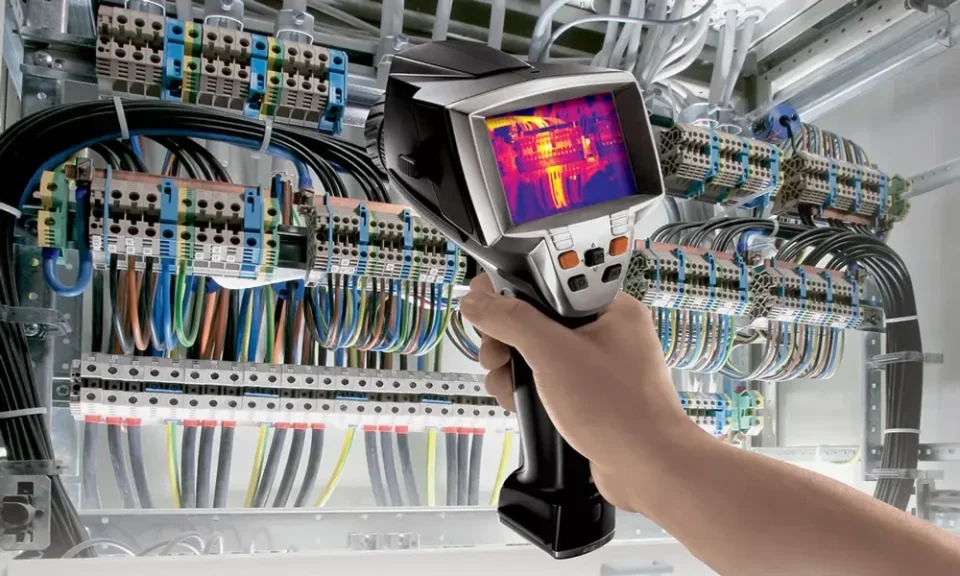
Many electrical faults begin as heat. A loose connection, an overloaded circuit or a deteriorating component generates more heat than normal, often long before it fails. Thermal imaging allows that heat to be seen without touching or switching off the equipment. For this reason, it has become a core tool in electrical maintenance for commercial and industrial installations. This article explains how thermal imaging works, what it can detect and how to get the most from it.
How Thermal Imaging Works
All objects emit infrared radiation according to their temperature. A thermal camera detects this radiation and converts it into an image showing temperature differences. Hot spots appear as bright colours against cooler surroundings. In electrical systems, these hot spots often indicate resistance where it should not be, such as at a loose or corroded connection. The equipment remains energised and in service during the scan, which is one of the method’s biggest advantages. Modern cameras are portable and produce images that can be stored, compared and shared, which makes them practical for routine surveys.
What Thermal Imaging Can Detect
Thermal scans reveal a range of common electrical problems. These include:
- Loose or corroded connections at terminals and busbars
- Overloaded circuits and cables
- Unbalanced loads across phases
- Failing breakers, fuses or contactors
- Deteriorating insulation in some components
Each of these can lead to equipment failure, outages or fires if left unaddressed.
Why Scanning Under Load Matters
Thermal imaging is most effective when equipment is carrying a significant load. Faults that cause heat become more visible as current increases. Scanning lightly loaded equipment may miss problems that would appear under normal operating conditions. Inspectors usually schedule scans during periods of typical or high demand. Recording the load at the time of the scan helps interpret the results and compare them with later inspections. As a general guide, many practitioners prefer equipment to be carrying a substantial share of its normal load during the scan.
Interpreting Temperature Differences
A hot spot alone does not always indicate a serious problem. Inspectors compare temperatures between similar components, such as the three phases of a circuit, and against ambient conditions. A connection that is significantly hotter than its neighbours is a concern. Standards and guidelines help classify the severity of findings, from those needing monitoring to those requiring immediate action. Experienced interpretation is essential to avoid overreacting or missing real issues. Comparing results with previous scans of the same equipment is often the most revealing check of all.
Benefits for Planned Maintenance
Thermal imaging supports a planned approach to electrical maintenance by identifying problems before they cause failures. Repairs can be scheduled during convenient shutdown windows rather than carried out as emergencies. This reduces downtime, lowers repair costs and improves safety. Over time, regular scans build a record of equipment condition, helping facilities prioritise repairs and plan replacements more accurately. Insurers and auditors also increasingly look for evidence of condition monitoring when assessing electrical risk.
Limitations to Be Aware Of
Thermal imaging has limits. It can only see surface temperatures, so faults hidden behind covers or inside equipment may not be visible unless panels are safely opened. Reflective surfaces can give misleading readings. Some faults, such as insulation breakdown in high-tension equipment, may not generate significant heat and need other methods, such as partial discharge testing. Thermal imaging works best as part of a broader maintenance programme. Outdoor equipment can also be affected by sunlight and wind, which change surface temperatures independently of any fault.
Safety During Thermal Scans
Scanning energised equipment carries risk. Opening switchboard covers exposes live parts, so scans must be carried out by competent personnel following safe work procedures. In Singapore, electrical work is governed by regulations requiring licensed electrical workers to oversee such activities. Appropriate protective equipment and safe distances must be maintained. Infrared windows can be installed on some switchboards to allow scanning without removing covers. Scans should never be rushed, and covers should only be removed where the procedure allows it.
How Often to Scan
The frequency of thermal scans depends on the criticality and condition of the equipment. Many facilities scan main switchboards and critical distribution boards annually, with more frequent scans for high-risk or heavily loaded equipment. Scans are also useful before planned shutdowns, to identify any repairs that should be carried out while the power is off. Following up after repairs confirms that the fault has been resolved. New installations also benefit from a baseline scan soon after commissioning, so later results have something to be compared with.
What a Good Thermal Report Includes
A useful thermal imaging report should contain:
- Thermal and visible images of each finding
- Temperature readings and comparisons
- Load conditions at the time of scanning
- Severity rating and recommended action
Clear reports allow facility managers to prioritise repairs and track improvements over time.
Making Thermal Imaging Part of Your Programme
Thermal imaging is a practical, non-intrusive way to detect electrical problems early. Combined with routine servicing and other condition monitoring methods, it helps keep installations safe and reliable. For facilities considering regular scans, a provider of infrared thermography inspection for switchboards can carry out the survey and help interpret the findings.
