
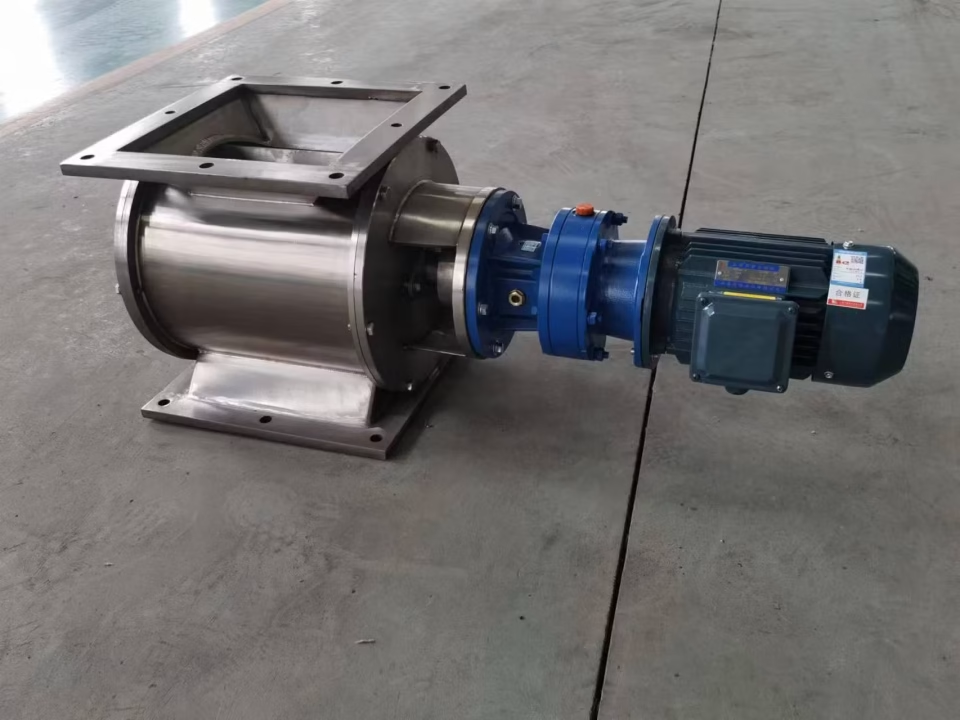
Stable movement of fine material is essential for reliable production. Equipment that guides powder through storage units and transfer channels must maintain steady motion without loss or blockage. Rotary airlock valves assist in controlled passage between sections while supporting pressure balance inside processing units. Many industries depend on this controlled movement to protect machinery while maintaining steady production output through a well-fitted rotary air lock valve.
Rotor Chamber Performance Balance
A carefully arranged rotor chamber maintains a steady distribution of powder during each rotation cycle. Correct spacing between chamber edges allows measured release without sudden pressure change. This structure works effectively when the rotary air lock valve rotates at a stable pace within the housing.
- Balanced chamber rotation maintains uniform powder movement through sealed transfer sections
- Proper spacing reduces sudden discharge bursts that disturb controlled material movement
- Smooth chamber surface helps reduce internal buildup during long production cycles
- Accurate rotor alignment supports a stable pressure difference between connected process units
- Continuous chamber turning guides steady powder feeding into the following equipment sections
Pressure Separation Support Method
Powder transfer often occurs between sections that operate at different pressure levels. Air control valves support separation by limiting unwanted air passage during movement. This function protects processing equipment while preserving a stable feed rhythm. When properly installed, these valves assist in consistent transfer without disturbing surrounding equipment or storage chambers.
Wear Reduction Component Structure
Strong internal construction helps extend equipment life during long production schedules. Smooth surfaces inside housing sections reduce friction as particles move between rotating chambers. Durable metal shaping also protects internal valves from gradual wear caused by constant movement.
- Smooth housing surface lowers friction during powder rotation through internal chambers
- Strong metal structure protects rotating components during extended production cycles
- Balanced shaft movement reduces vibration affecting the surrounding transfer equipment units
- Stable chamber edges limit unnecessary contact between moving powder and metal surfaces
- Consistent rotation pattern supports controlled feeding during long operating periods
Consistent Feeding System Operation
Reliable feeding depends on equipment that maintains uniform release during each operating cycle. Well-structured internal sections guide powder from storage units toward transfer channels at a controlled speed. Carefully engineered valves maintain steady rhythm which protects surrounding machinery while supporting continuous production.
Simple Operational Guidance
Careful equipment selection supports long-term production stability. Correct internal design helps regulate powder release while maintaining separation between pressure zones. Reliable rotor balance reduces stress on connected systems and encourages smooth movement through storage units. Regular inspection of internal chambers keeps the feeding accuracy stable over time. When proper configuration is used, powder transfer becomes predictable, safe, and efficient across many processing environments.
FAQ
How do airlock mechanisms support stable powder movement in processing equipment?
They regulate measured discharge while maintaining pressure separation between connected processing units.
Why does chamber alignment influence feeding consistency inside powder transfer equipment?
Correct alignment maintains uniform rotation, which stabilizes powder discharge during operation cycles.
What helps extend the operating life of powder transfer control equipment components?
Strong structure, smooth surfaces, proper alignment, and reduced wear during continuous operation.
